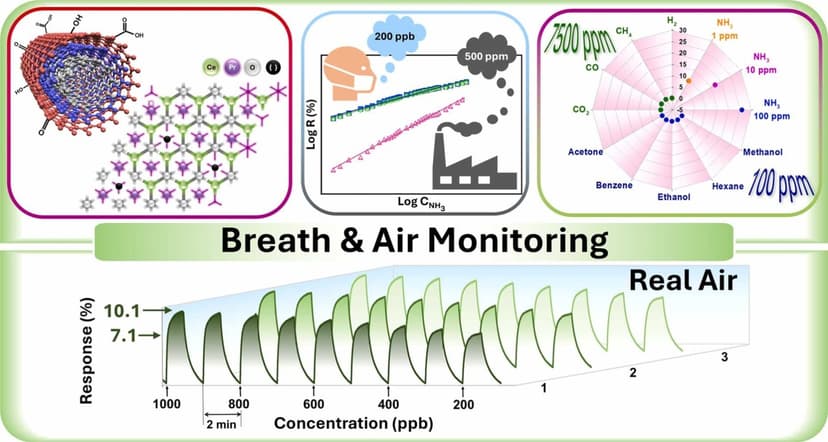
Ammonia is a hazardous atmospheric pollutant of major industrial relevance, yet reliable room-temperature (RT) detection in real conditions remains challenging for conventional metal-oxide sensors due to high operating temperatures, poor sensitivity and selectivity, humidity effects and limited real air validation.
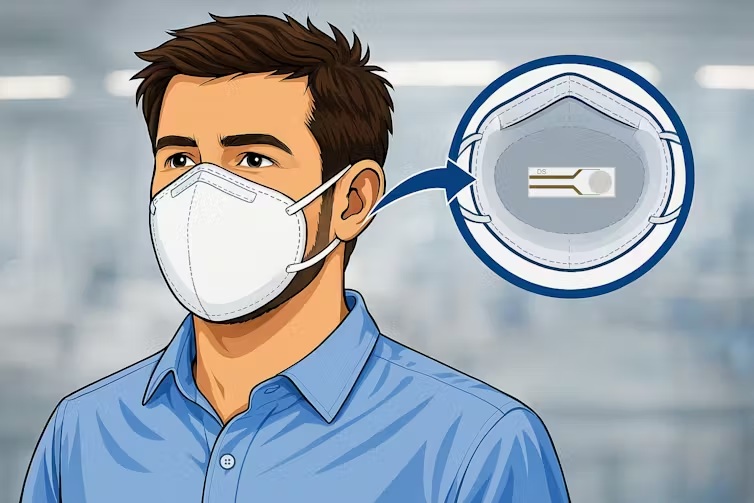
Aunque invisible al ojo humano, el aliento es un espejo de lo que ocurre a diario en nuestro cuerpo y puede indicar la presencia de enfermedad. La breatómica es la nueva ciencia que lo estudia.
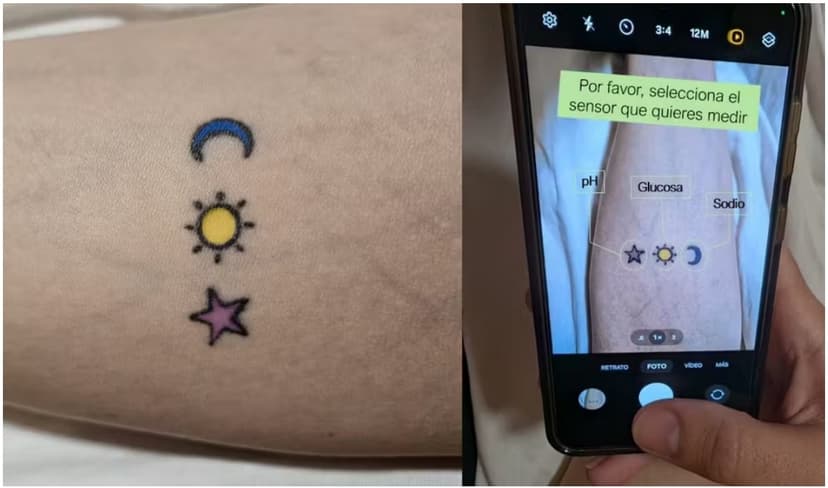
Los tatuajes inteligentes redefinirán el cuidado de la salud con avances cada vez más visionarios. Estos dispositivos, que integrarán tintas biocompatibles en lugar de las convencionales, modificarán su color, emitirán señales fluorescentes y sincronizarán datos con aplicaciones móviles para transmitir mediciones en tiempo real. Se proyecta un futuro en el que estos tatuajes no solo vigilarán parámetros como la glucosa en sangre, sino que también intervendrán activamente para preservar vidas mediante una supervisión continua y no invasiva del estado de salud.
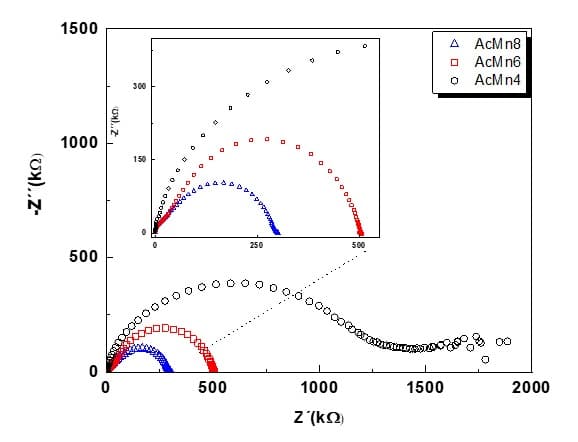
This work aims to explore the synthesis and electrical/structural characterization of hausmanite and bixbyite-type manganese oxides obtained via thermal oxidation. SEM was used for morphological analysis, while XPS characterized the chemical environments of Mn and O. Crystalline phases were identified using XRD and Rietveld refinement. Impedance spectroscopy provided insights into conductivity, supported by Nyquist plots, equivalent circuits, permittivity, and dielectric modulus to understand charge transport. Conductivity findings were validated through density functional theory (DFT) calculations, contributing to the understanding of conduction mechanisms relevant to catalytic potential.
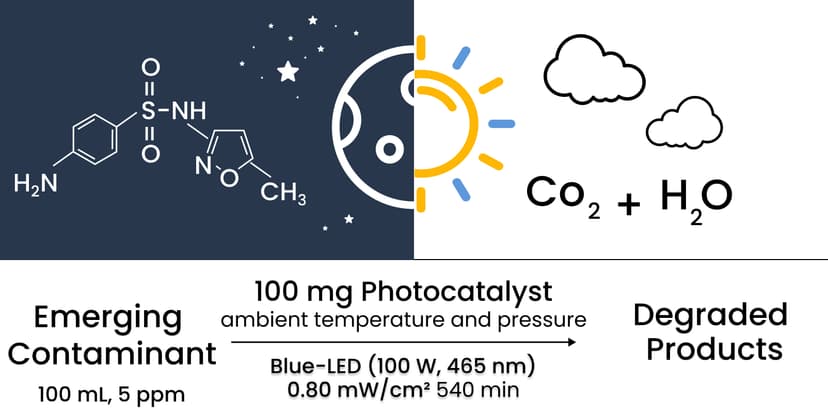
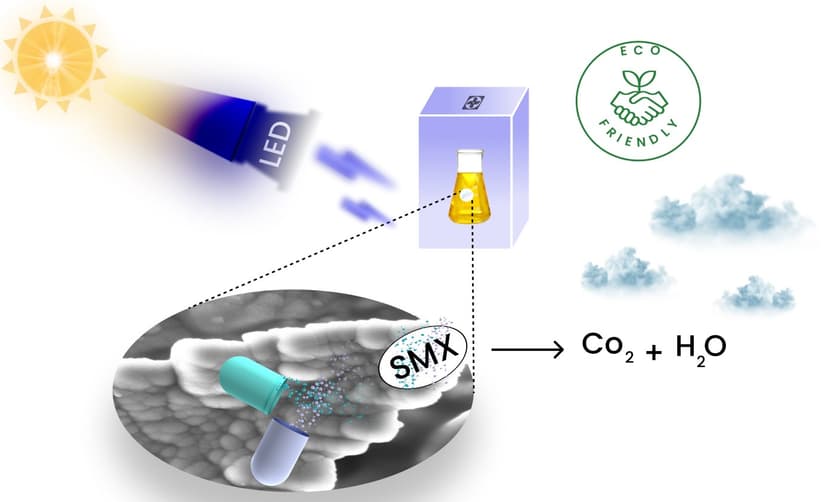
In this study, the synthesized catalysts WERE evaluated for its photocatalytic activity in the degradation of sulfamethoxazole (SMX) under blue-LED irradiation (λ = 465 nm). Remarkably, high degradation efficiency was achieved using visible light, comparable to values reported in the literature despite employing a less powerful light source. Additionally, the toxicity of the treated water was assessed through the standardized luminescent inhibition biotest using Vibrio fischeri, providing insight into the environmental safety of the photocatalytic process.
This research explores how a new material can help remove an emerging contaminant from water using blue LED light. Before starting the light treatment, the material was mixed with the contaminated water and left to rest in the dark to allow a balance between the contaminant and the surface of the material. The light treatment lasted several hours, and small samples were taken regularly to check how much of the contaminant was removed. These samples were filtered and analyzed using light absorption techniques. Finally, the safety of the treated water was tested using bacteria that glow in the dark, helping to understand if the process makes the water less toxic.
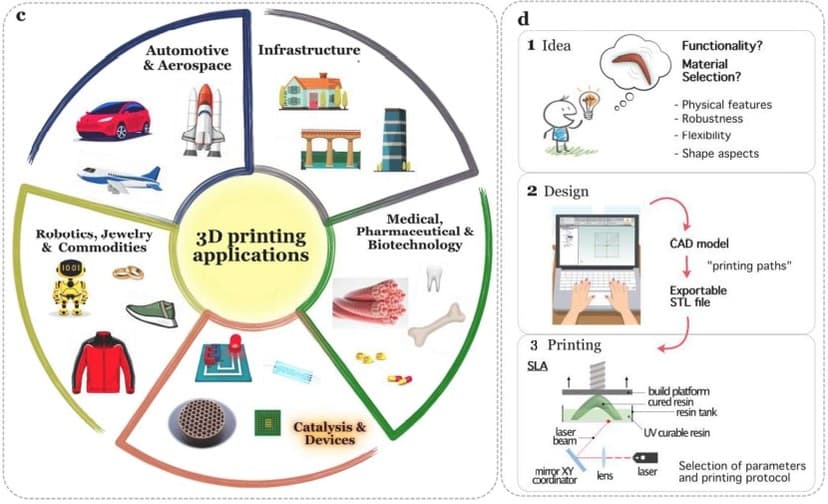
This research explores how certain materials can be activated by light to help remove pollutants from water, through a process called photocatalysis. While traditional materials have been widely studied, using 3D printing to improve their performance is a new and promising approach. Progress is slower due to added challenges, but this work offers a simple explanation of how photocatalysis works, what has been achieved so far with 3D printing, and what future possibilities exist by combining both technologies.
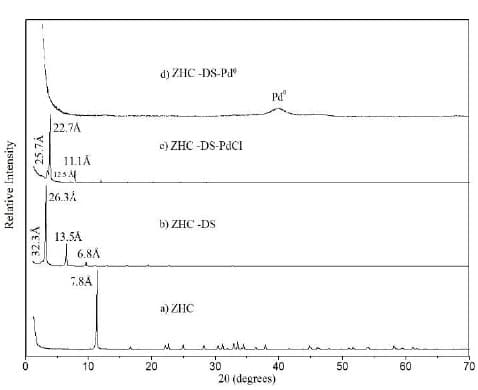
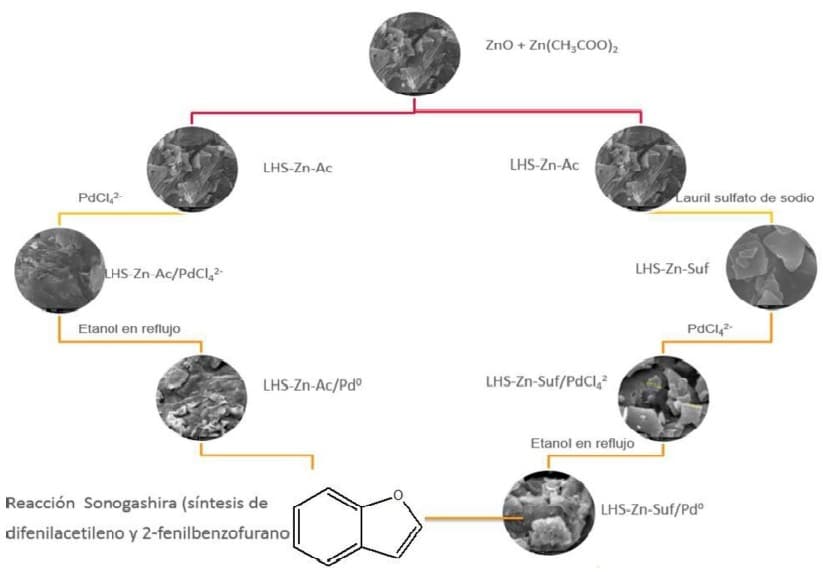
Palladium nanoparticles supported in the interlayer space of hydroxysalts were obtained from zinc hydroxychloride via a prior intercalation of the anionic surfactant sodium dodecyl sulfate (DS), followed by an exchange with potassium tetrachloropalladate and its final reduction to metallic palladium by ethanol. The final materials and their intermediates were characterized by several instrumental techniques such as PXRD, N2 adsorption, SEM, and TEM. The comparative analyses revealed clearly visible changes on structure, specific surface area and morphology of the reduced material with respect to the starting precursors. The analyses demonstrated that, upon modification of the starting material with the surfactant, the resulting material had a significantly enhanced interlayer space and BET area, which were fairly maintained until the reduced palladium-containing hydroxysalt was obtained.
This article reports the synthesis of palladium nanoparticles supported on zinc acetate hydroxysalts and modified with a surfactant (LHS-Zn-Ac/Pd0 and LHS-Zn-Suf/Pd0 respectively), by insertion of tetrachloropaladate and its subsequent reduction with ethanol at reflux. With the surfactant insertion, the interlaminar distance of the starting hydroxysalt (LHS-Zn-Ac) increased from 13.8 Å to 29.8 Å, while the final materials containing palladium metal registered interlaminar distances of 22.4 Å and 29.4 Å for LHS-Zn-Ac/Pd0 and LHS-Zn-Suf/Pd0 respectively. Zinc acetate hydroxysalt and surfactant with incorporated palladium metal nanoparticles were tested as potential catalysts in the Sonogashira reaction starting from phenylacetylene and aryl iodides, particularly iodobenzene or 2-iodophenol, giving diphenylacetylene (32% yield of isolated and purified product) or 2-phenylbenzofuran (18%). All inorganic materials were characterized by the following techniques: (1) X-ray diffraction (XRD), (2) scanning electron microscopy (SEM and SEM-EDS), (3) transmission electron microscopy (TEM) and (4) Fourier transformed infrared spectroscopy (FT-IR). The organic compounds were characterized by nuclear magnetic resonance (1H-NMR and 13C-NMR) and gas chromatography coupled to mass spectrometry (GC-MS).
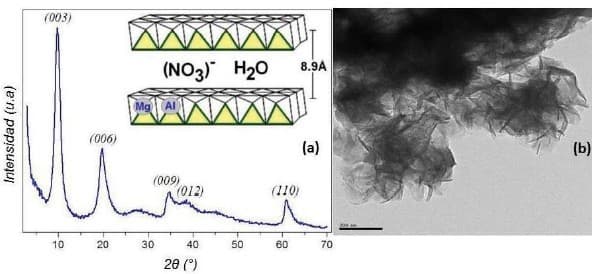
This study focuses on charge transport in Mg-Al layered double hydroxides (LDH) with nitrate ions as guest species. These nanomaterials can adjust their properties depending on the molecules placed between their layers, allowing the incorporation of various compounds like nanoparticles, polymers, DNA, and enzymes. Due to this flexibility, LDHs are useful in applications such as catalysis, sensors, drug delivery, UV protection, fuel cells, and energy storage devices.
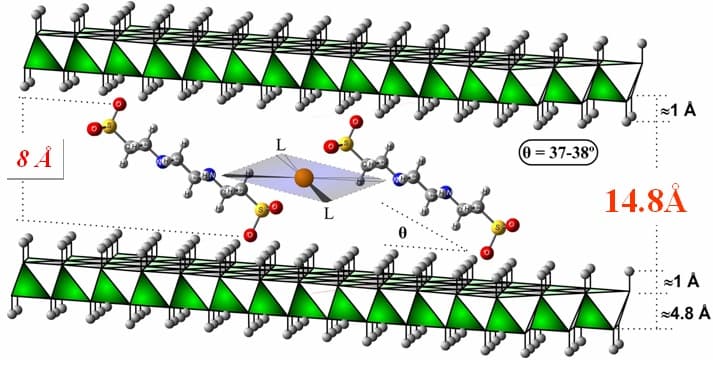
El presente capítulo tiene como objetivo describir los procedimientos de síntesis y caracterización fisicoquímica —mediante AA, XRD, FTIR, micro-Raman, SEM-EDS y TGA-DTG— de hidróxidos dobles laminares (HDL) obtenidos con una relación molar Mg/Al de 2:1, modificados por intercambio aniónico con la molécula orgánica Piperazina-1,4-bis(2-etanosulfonato) (PIPES), la cual actúa como ligando en la formación de complejos metálicos de cobre. En este proceso, los pares electrónicos de los átomos de nitrógeno en dos moléculas adyacentes de PIPES deben orientarse hacia el ión metálico, y la configuración tipo “silla” favorece esta interacción, facilitando la captura del ión por dichos pares electrónicos.
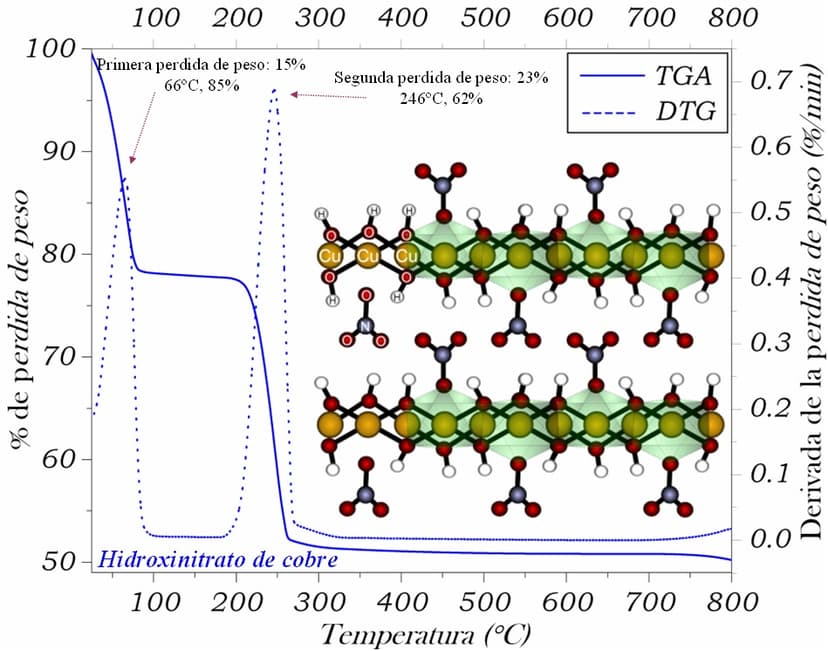
The aim of this work is to present a simple and fast method for synthesizing copper hydroxynitrate, a layered material of growing interest. Two-dimensional solids like this have attracted increasing attention due to their potential applications, especially for their ability to intercalate ionic or neutral species between layers, where weak interactions allow structural flexibility. The proposed method operates under mild conditions, without requiring changes in temperature or pressure, and yields a highly crystalline product despite the absence of long aging times typically reported in other approaches. This study contributes to the synthesis and characterization of hybrid layered phases and materials, with relevance to electrochemical electrode preparation, physicochemical and structural analysis.